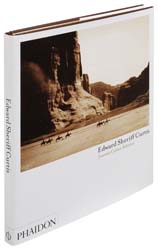
Edward Sheriff Curtis
A beautiful monograph featuring Curtis's nineteenth-century portraits of Native Americans
340 Kč
DMOC: 690 Kč
-51%
Momentálně nedostupné
- Edward Sheriff Curtis (1868–1952) is one of the earliest successful portrait photographers, well-known for his remarkable archive of prints documenting the Native American people and their way of life in the late-nineteenth and early-twentieth century
- This book is the best available introductory monograph to Curtis’s work featuring a series of 55 chronologically organised images from the range of Curtis’s body of work including his iconic and mesmerising images of Native American chiefs, pictures of men hunting and women at work on traditional crafts, beautiful American West landscapes, and classic examples of the studio portraits that were more typical of the Pictorialist photography of the period
- One of the first visual anthropologists Curtis intended to photograph the Native American communities to document a ‘vanishing race’ but his real success lay in creating a powerful record of faces, time and place that transcend their original intention and still have significance as a body of work
- His documentation of the Native American tribes was supported by President Theodore Roosevelt and financier J.P. Morgan and was published in several volumes as The North American Indian – a highly collectible body of work which remains of interest to anthropologists, historians and photographic enthusiasts and students today
- The introductory essay is written by an expert on Curtis who provides a new perspective on his role in shaping the image of Native Americans in the twentieth century, as well as assessing his photographs in incisive picture-by-picture commentary

Podrobnosti
| Vydavatel |
Phaidon |
|---|---|
| Jazyk | anglicky |
| Vazba | pevná s přebalem |
| Počet stran | 128 |
| Formát | 250 × 290 |
| EAN | 9780714841762 |
| Edice |
Fotografie Fotografické monografie Reportážní fotografie |
- Edward Sheriff Curtis (1868–1952) is one of the earliest successful portrait photographers, well-known for his remarkable archive of prints documenting the Native American people and their way of life in the late-nineteenth and early-twentieth century
- This book is the best available introductory monograph to Curtis’s work featuring a series of 55 chronologically organised images from the range of Curtis’s body of work including his iconic and mesmerising images of Native American chiefs, pictures of men hunting and women at work on traditional crafts, beautiful American West landscapes, and classic examples of the studio portraits that were more typical of the Pictorialist photography of the period
- One of the first visual anthropologists Curtis intended to photograph the Native American communities to document a ‘vanishing race’ but his real success lay in creating a powerful record of faces, time and place that transcend their original intention and still have significance as a body of work
- His documentation of the Native American tribes was supported by President Theodore Roosevelt and financier J.P. Morgan and was published in several volumes as The North American Indian – a highly collectible body of work which remains of interest to anthropologists, historians and photographic enthusiasts and students today
- The introductory essay is written by an expert on Curtis who provides a new perspective on his role in shaping the image of Native Americans in the twentieth century, as well as assessing his photographs in incisive picture-by-picture commentary
Podobné knihy