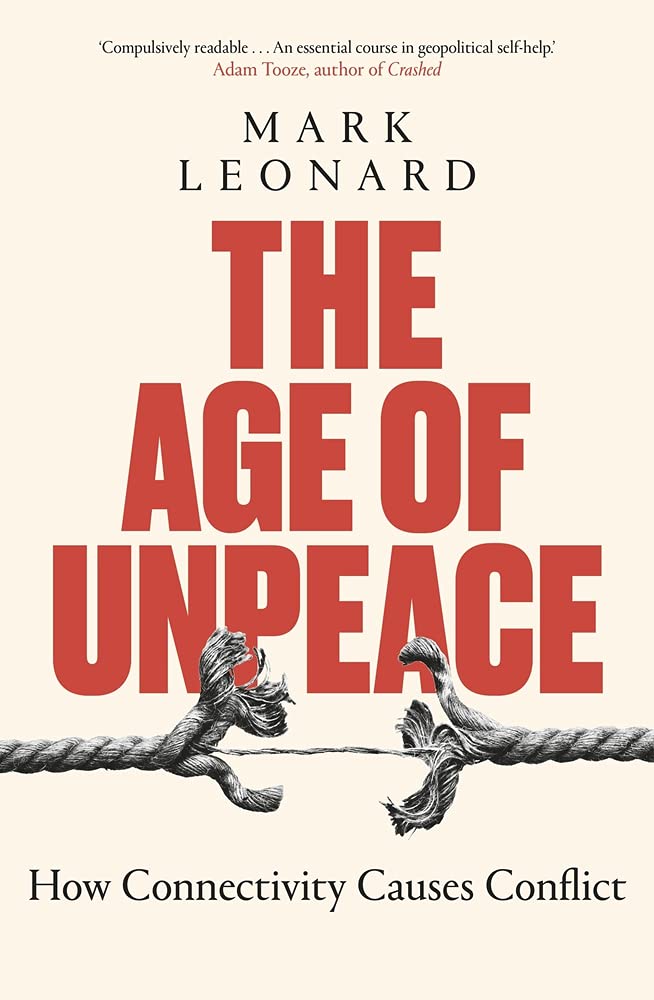
The Age of Unpeace: How Connectivity Causes Conflict
The rise in nationalism is not a bump in the road - it's part of the paving.
In the three decades since the end of the Cold War, global leaders have been integrating the world's economy, transport and communications, breaking down borders in the hope of making war impossible. In doing so, they have unwittingly created a formidable arsenal of weapons for new kinds of conflict and the motivation to keep fighting.
Troublingly, we are now seeing rising conflict at every level, from individuals on social media all the way up to nation-states in entrenched stand-offs. The past decade has seen a new antagonism between the US and China; an inability to co-operate on global issues such as climate change or pandemic response; and a breakdown in the distinction between war and peace, as overseas troops are replaced by sanctions, cyberwar and the threat of large migrant flows.
As a leading authority on international relations, Mark Leonard has been inside many of the rooms where our futures, at every level of society, are being decided - from Facebook HQ and facial-recognition labs in China to presidential palaces and remote military installations. In seeking to understand the ways in which globalization has broken its fundamental promise to make our world safer and more prosperous, Leonard explores how we might wrest a more hopeful future from an age of unpeace.
Review
Thought-provoking... If Leonard is right, then every trade deal or every new technology that brings people closer will also make the world a more dangerous place. ― Irish Times
Leonard is a creative and well-connected thinker, and his timely, insightful book is useful for its explanations of the differing ideological viewpoints found in Beijing, Brussels and Washington, with an interesting section on Chinese thinkers in particular. Just as important, he explains why the conflicts in our global era remain so different from those in the cold war, in particular given the role being played by new technologies from quantum computing to machine learning as a new focus for geopolitical contestation. -- James Crabtree ― Financial Times
Mark Leonard... has been a force in foreign policy thinking for a quarter century... rich in data and anecdote... If you're feeling intellectually disoriented after the fall of Kabul, start here.
Compulsively readable, Mark Leonard's globe-trotting book not only offers us a fascinating and disturbing panorama, it redefines realism for an age of massive and toxic connectivity. Rather than fleeing into anachronistic visions of grand architecture and Cold War rhetoric, it demands that we face our actual problem. An essential course in geopolitical self-help. -- Adam Tooze, author of Crashed: How a Decade of Financial Crises Changed the World
About the Author

Podrobnosti
| Autor |
Mark Leonard |
|---|---|
| Vydavatel |
Bantam |
| Jazyk | anglicky |
| Vazba | měkká |
| Počet stran | 240 |
| Formát | 16,2 × 22,2 cm |
| EAN | 9781787634664 |
| Rok vydání | 2021 |
| Edice |
Společnost a společenské vědy Technika a technologie |
Autor
Mark Leonard
Další knihy autora z oddělení Cizojazyčné knihy
Podobné knihy

The Year of Living Danishly: Uncovering the Secrets of the World’s Happiest Country